
HB21-1162, the Plastic Pollution Reduction Act (PPRA) passed in 2021 and has been in effect since 2023. This page is here for you to grab resources from our collaborative toolkit, see the progress made from this legislation, and get inspired to make an impact in your community.
Plastic Bags are gone...What do you do now?
Plastic bags have been around for over 60 years. While they leave the store as a means to carry your purchased goods, people have developed a habit for reusing them as a tool in their homes and businesses. With fewer plastic checkout bags being distributed, people may need to rethink some of the secondary uses they had developed for those bags. How can you still reduce your impact while filling the needs these bags?
If you forget your reusable bags at home, don't panic!
- Ask the store's staff for a discarded product box or bag to use. They usually have plenty on hand from unpacking products.
- If you drove to a store: Load all your items back into your cart or basket, wheel them out to your vehicle and stack your items in your vehicle. When you get home, you can grab your bags and bag all your items for transportation to inside your home.
- Keep a few reusable bags in places you are likely to need them (your car, backpack, purse, or workplace), so you have a backup when you need it.
- Larger baskets or wagons are handy to keep in the back of a vehicle for convenient item loading and transportation from the store to your door.
- As always, you could buy another reusable bag or ask a friendly customer to borrow one. We're all here to support one another.
One of the first things people ask when we mention that bags are banned is “What will I use as a trash bag or pet waste clean up bag?” While there are still trash and pet waste bags on the market that you can purchase, there are some creative solutions you can also try:
- Old or dirty food storage bags from bread, tortillas, cheese, snacks, etc. that would otherwise be discarded can be given one last purpose as small waste disposal bags
- Large product bags or boxes including delivery packaging, pet food or cat litter packaging, or compost/gardening packaging are great options for larger trash or pet waste disposal.
- While the plastic bags are no longer distributed at local stores, you may still receive a paper bag which is great for pet waste scooping and as small trash bags.
Dry Goods
- Reuse clean bread, tortilla, cereal, cracker, and other food packaging for lunches, snacks, or storing dry goods.
- Use reusable silicone bags, washable fabric snack bags, containers, jars, or repurposed takeout containers.
- For messy foods, put the container inside a reusable lunch bag rather than relying on a disposable bag.
Freezer Storage
- Reuse appropriate food packaging that is clean and designed to hold food.
- Repurpose containers such as yogurt tubs, takeout containers, jars, or other freezer-safe containers.
- Freeze food in reusable silicone bags or containers when appropriate.
Travel & Packing
- Try a reusable toiletry bags and containers, packing cubes, or small pouches.
- Reuse sturdy packaging from products you already purchased for organizing small items.
Car & road trips
- Keep a small reusable trash container or washable bin in the car.
- A reusable container with a lid can handle the inevitable road-trip snack wrappers.
- Store emergency supplies in reusable pouches instead of disposable bags.
Dirty or Wet Clothing
- Keep a washable wet bag in a gym bag, diaper bag, hiking pack, or car.
- An old pillowcase or towel can also work for containing damp clothing until it can be washed.
Moving & Transporting Items
- Save sturdy boxes, paper bags, reusable shopping bags, and packing materials for future moves or transporting items.
- Ask friends, neighbors, or community groups for used boxes before purchasing new ones.
Storage & Organization
- Small boxes, jars, tins, paper bags, and product packaging can become organizers for craft supplies, cords, hardware, pet supplies, etc.
- Reusable fabric bags can help organize seasonal items.
Yard Waste
- For small amounts of leaves, weeds, or other yard debris, use a bucket, reusable garden tub, tarp, wheelbarrow, or paper yard-waste bag where appropriate.
- For larger projects, go directly into a compost/yard-waste container rather than bagging material first.
Donations & Sharing
- Use reusable bags, boxes, or paper bags when dropping off clothing and household goods.
- If you're giving something away through Buy Nothing, Facebook Marketplace, etc., consider asking the recipient to bring their own bag or container.
- Reusable totes or bins for internal transport
- Cardboard boxes and paper bags for appropriate materials
- Reusable laundry-style bags for uniforms or textiles
- Wheeled carts/totes for moving materials around a facility
- Reusable containers for deliveries between locations
- Designing purchasing and inventory systems to avoid unnecessary secondary packaging
Taking a Step Further
The state's PPRA law only limits the distribution on plastic bags and styrofoam takeout containers. Colorado communities are experimenting with different ways to reduce single-use plastic waste:
- Breckenridge has banned single-use plastic water bottles under one gallon as of July 1st, 2024. Visitors are advised to bring a reusable water bottle and take advantage of our refill stations located throughout town.
- Frisco also banned the sale of single-use plastic water bottles under one gallon as of July 1st, 2024. The ordinance also addresses other single-use plastics and requires certain takeout items be provided by request.
- Telluride banned the distribution of single-use plastic water bottles under one gallon, along with a broader list of single-use plastic food-service items on September 1st, 2024.
Takeaways so far: A policy change is only one piece of the puzzle. Successful transitions also require convenient alternatives, communication with businesses, infrastructure such as water refill stations, and time to understand the environmental results.
PPRA Toolkit
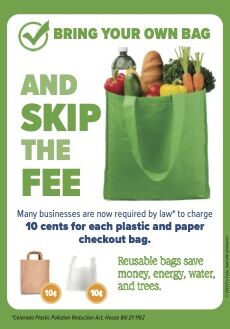
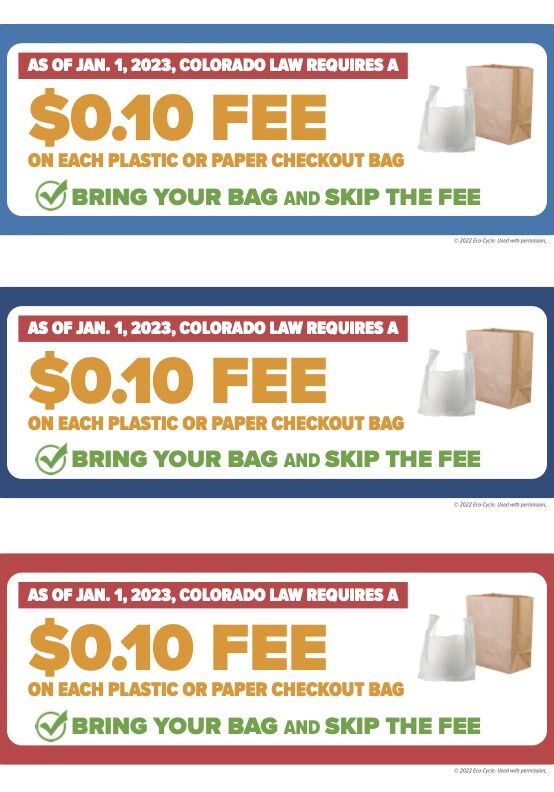
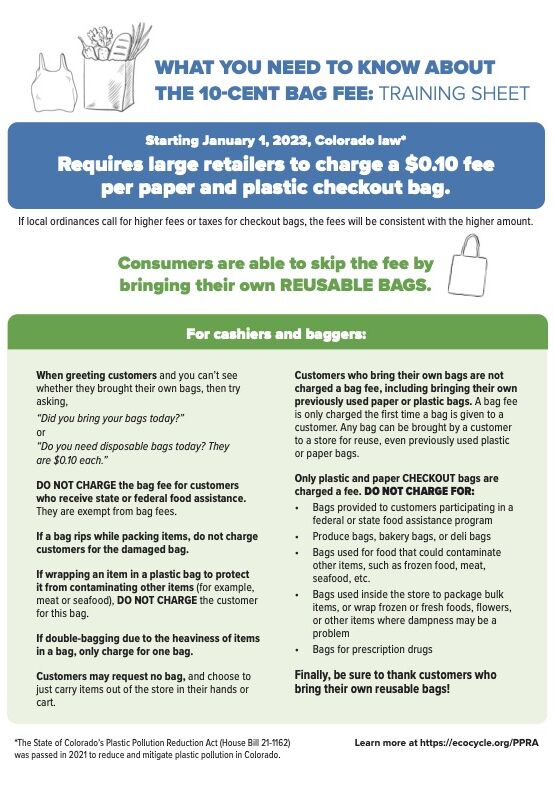
The Colorado Plastic Pollution Reduction Act (House Bill 21-1162) was passed in 2021 to reduce the generation of some of the most polluting and toxic plastics in the state. Phase 1 of implementation of the PPRA, effective January 1, 2023, required large Colorado retailers to charge a minimum $0.10 fee on each plastic or paper checkout bag. Phase 2 includes a plastic bag ban and a ban on the use of polystyrene foam.

Polystyrene Ban: Exempt vs. Nonexempt
What do the bag fees go?
The 10¢ carryout bag fee isn't a state tax. Under Colorado's Plastic Pollution Reduction Act, 60% of the fee is remitted by stores to the municipality or county where the store is located, while stores retain the remaining 40%. Local governments can use the portion they receive for:
- Administrative and enforcement costs associated with the bag requirements
- Recycling, composting, and other waste diversion programs
- Outreach and education related to waste reduction and diversion
The fees collected in your community can help support local waste reduction and diversion efforts rather than going into a statewide fund. Not every municipality or county has chosen to collect the local portion of the fee, so how the fee is handled can vary from community to community.

Download and customize PPRA resources for your business or community
Additional Plastic Ban Resources
- HB21-1162 Management of Plastic Products Concerning the management of plastic products bill summary.
- Fort Collins’ Disposable Bag Ordinance
- Holly Pummell, previous Senior Sustainability Specialist with the City of Fort Collins, discussed with us the Fort Collins Disposable Bag Ordinance that went into effect May 1, 2022. The ordinance states that large grocers in Fort Collins will no longer provide plastic grocery bags and will begin charging customers for each paper bag used. Watch the Presentation
- Randy Moorman discusses the basics of the Plastic Pollution Reduction Act: What is it and how will it affect you. Watch this presentation
- Learn about Northern Colorado Cannabis Businesses who have replaced single-use plastic products with durable packaging. Also hear from a private business who uses the triple-bottom line to find sustainable solutions to disposable plastic packaging. Watch the Presentation.
- CML, Recycle Colorado, and Colorado Counties, Inc. hosted a webinar and workgroup to discuss the implementation of the law, including best practices for collecting the fee from retail establishments, communication tips, and education resources, and an overview of commonly asked questions. Watch this Presentation.
Do you have educational resources to share? If so, please contact us!